This is the photo album of Randa Berouti Randa Berouti is an artist who creates mini-sculptures of gold, silver, and stones. The story of the Beroutis here is about Randa's father Charles Berouti, her grandparents Emi...
8/5/202332.0489, 34.7524
Social structures and governance: FamilyHuman habitation: Residential BuildingsShared and contested heritage: Memory and IdentityHuman habitation: Cities
Randa Berouti is an artist who creates mini-sculptures of gold, silver, and stones. The story of the Beroutis here is about Randa's father Charles Berouti, her grandparents Emile and Victoria Berouti and about her maternal grandparents the Halabis. This is a story of Jaffa and the family home in Al Ajami. The story continues after the Nakba in 1948 when the city was ethnically cleansed with pictures from exile. All the photos and information are from Randa Berouti’s private collection.
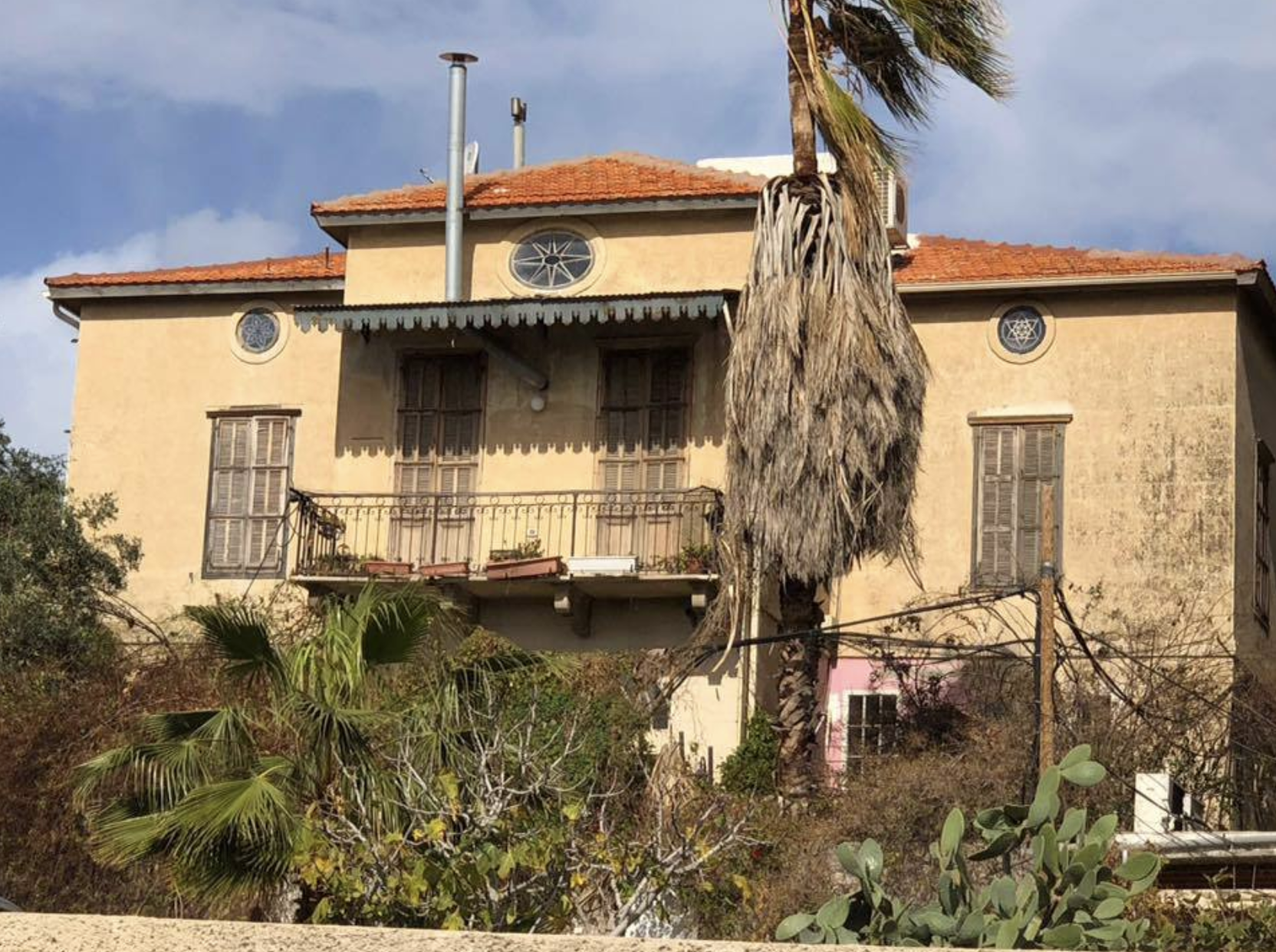
The Berouti home in Jaffa in Al Ajami neighborhood today. The house was built by Randa Berouti’s great-grandfather who planted a garden with citrus trees around the house. The house is located near the British Hospital and today has different occupants of whom the owners of the house don’t know anything except that the garden has been cut off and the house uncared for.Here are Emile Berouti and Victoria (Fiaani) in 1921 in Jaffa. Emile and Victoria are Charles Berouti’s parents and the carers of Bruno. They are Randa Berouti’s paternal grandparents.
Meet Randa’s father Charles Berouti and his dog Bruno in 1918 in a Jaffan photo studio
Here is a photograph of Charles’s first cousin Mary Berouti, on her first confirmation in Jaffa, 1916A five-year-old Charles Berouti at home, this time with his kitten in Jaffa around 1921-22Charles grew up to be Jaffa’s tennis champion most probably at the “Circle Sportive Club”This is the maternal side of Randa Berouti. In the picture is Charles Berouti’s future mother-in-law Lydia El Halabi, with her children. Lydia is holding her daughter Nada (Charle’s future wife and Randa's mother). Lydia's home garden, Jaffa, 1922 Jaffa 1925 Randa Berouti’s maternal grandparents, Lydia and Issa El Halabi, and their children. Randa’s mother Nada is between the parents standing in the back.
Jaffa 1926 Randa Berouti’s mother with her siblings, the Halabis. Nada is in the first row on the left. On the right is Nuha in her eldest brother Suheel’s lap. Standing in the middle is her brother Raouf, who was killed in 1948.
Randa Berouti’s maternal grandparents. Issa El Halabi with his family, Nada El Halabi on the left standing behind her father. Jaffa, 1933Cousin Aida Berouti’s wedding. Her sister is behind her holding their father's hand. Jaffa, 1942Nada Halabi is on the left with Charley her future husband behind her in a white suit. The rest are Nada’s siblings and the parents, Lydia and Issa, are in the middle. Jaffa, 1942
Nada and Charles while they were engaged in Nada’s home’s garden in Jaffa, 1942Nada El Halabi Berouti on her wedding day on 21 June 1944
Charles and Nada Berouti at the Latin Church door coming out of their wedding ceremony, Al Ajami, Jaffa, 21st of June 1944
“Four years after this wedding photo, when Nada was 27 and Charles 32 years old, they had to rush from the war zone with only enough money for a month. The British blocked all Palestinian money in the banks. With 3 babies. My brother was only 3 months old… Never allowed to return home. They fled to Damascus and then to Lebanon. They lived in one room in very hard conditions...” Randa Berouti, Wedding in Jaffa 1944
“The Arab accounts are twice blocked”: UK Treasury currency regulations (Feb 22, 1948) and Israeli Government “freeze order” (June 12, 1948)
On February 22, 1948, the British Treasury’s suddenly announced, “without any prior notice or explanation, that it would “exclude Palestine from the sterling area and henceforth suspend the free convertibility of Palestinian pounds into pounds sterling.” It also stated that the Palestine Currency Board would no longer, after May 14, 1948, continue to issue Palestinian pounds,” so that the “termination of the Mandate for Palestine would be accompanied with the end of Palestinian currency as legal tender.”
Charles’s brother, George Berouti, and Laila Tayyan’s wedding in Jaffa on the stairs of the Latin Chruch in Jaffa, Al Ajami, 1946
George and Laila Berouti’s wedding at the Latin Chruch Jaffa, 1946Randa Berouti’s father Charles in the white suit at his brother's wedding 1946Salma Berouti, Elie Roch, Louba and George Berouti in Jaffa, 1944.Salma Berouti’s wedding in Jaffa, 1947. This was the last Berouti wedding in Jaffa before their exile.
Exile
On 14 May 1948 Nada, 27, and 32-year-old Charles, rushed from the war zone with two children and a 3-month-old baby. They collected all the money they were able to because all bank accounts were blocked, in addition, the British soon declared that the Palestinian Pound ceased to exist which meant the cash you had was non-exchangeable. The Beroutis had money to sustain them for one month. They were like all other Jaffans, expecting to come back after 'things calmed down' in a few week or months, but after things calmed down, they were never allowed to return to their home or city.
Randa Berouti on her sister Samia’s back in exile as refugees. Samia was born in Jaffa and Randa was born into the refugee family in Beirut.
Randa on the left with her cousin Maher
Randa’s older siblings, from left sister Nada and brother Raja.
In addition to sorrow, life continues with family moments, culture, and more weddings.
Ranada on the left with her brother Raja and sister Nada in exile.Daughters of Jaffa 9 years after turning refugees: identical twins Laila and Nelly, first and third from left.
A Berouti wedding in exile, now Randa is born and is the flower girl on the right with her finger on her chinRanda Berouti at her paternal cousin’s wedding in exile
Randa Berouti in her mother Nada’s lap at her cousin’s wedding
Back row three Jaffan sisters from left Aida, Nuha, and Nada, in front are the sisters Samia and Nada, all born in Jaffa, now refugees in Beirut, two years after their exile in 1950
The Beirouti home has a tile at its entrance: “The Beirouti family home”. Some Jaffan youth got the family name plate designed and put it on the entrance to the house. The house is occupied now by strangers. “How can you live in a home that has its owners’ name at the door?” Asks Randa Berouti.
The Berouti neighbor’s house, the Arqatinji home (also exiled family and the then villa taken over by the occupiers). Alexander Berouti’s home is 40 meters away from Arqatanji's home. The Beroutis carry documents of its ownership of their home but have not been allowed to even visit. The house is occupied.