Published Story
Girls, Schools, and an Imaginary Sheikh
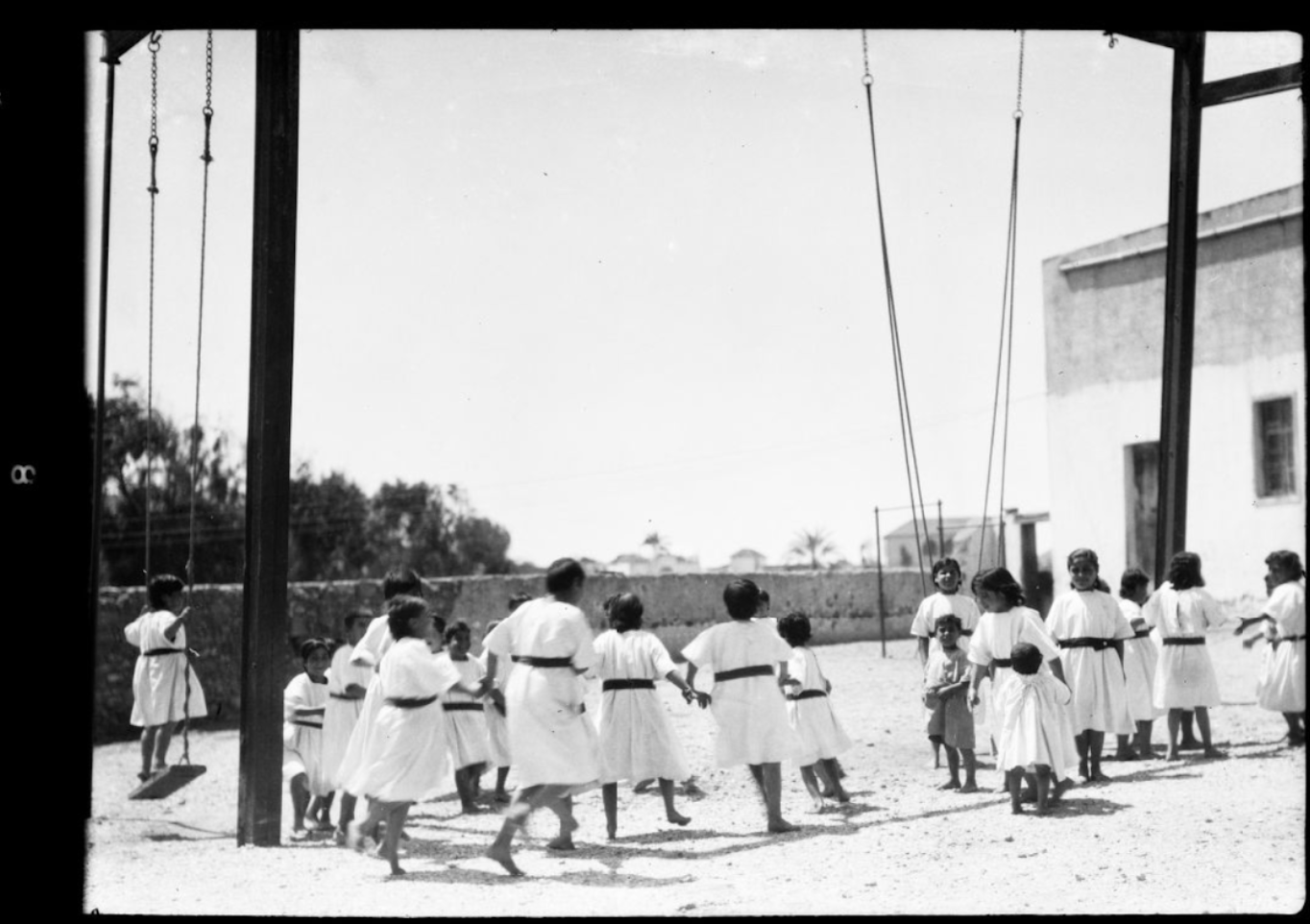
Scholten girls at an orphanage in Jaffa 1921-23. Jaffa was among the cities with the most schools in Palestine. Between 1944 and 1945, 77% of the Jaffan boys and 57% of the girls were attending school. Seven of Jaffa...
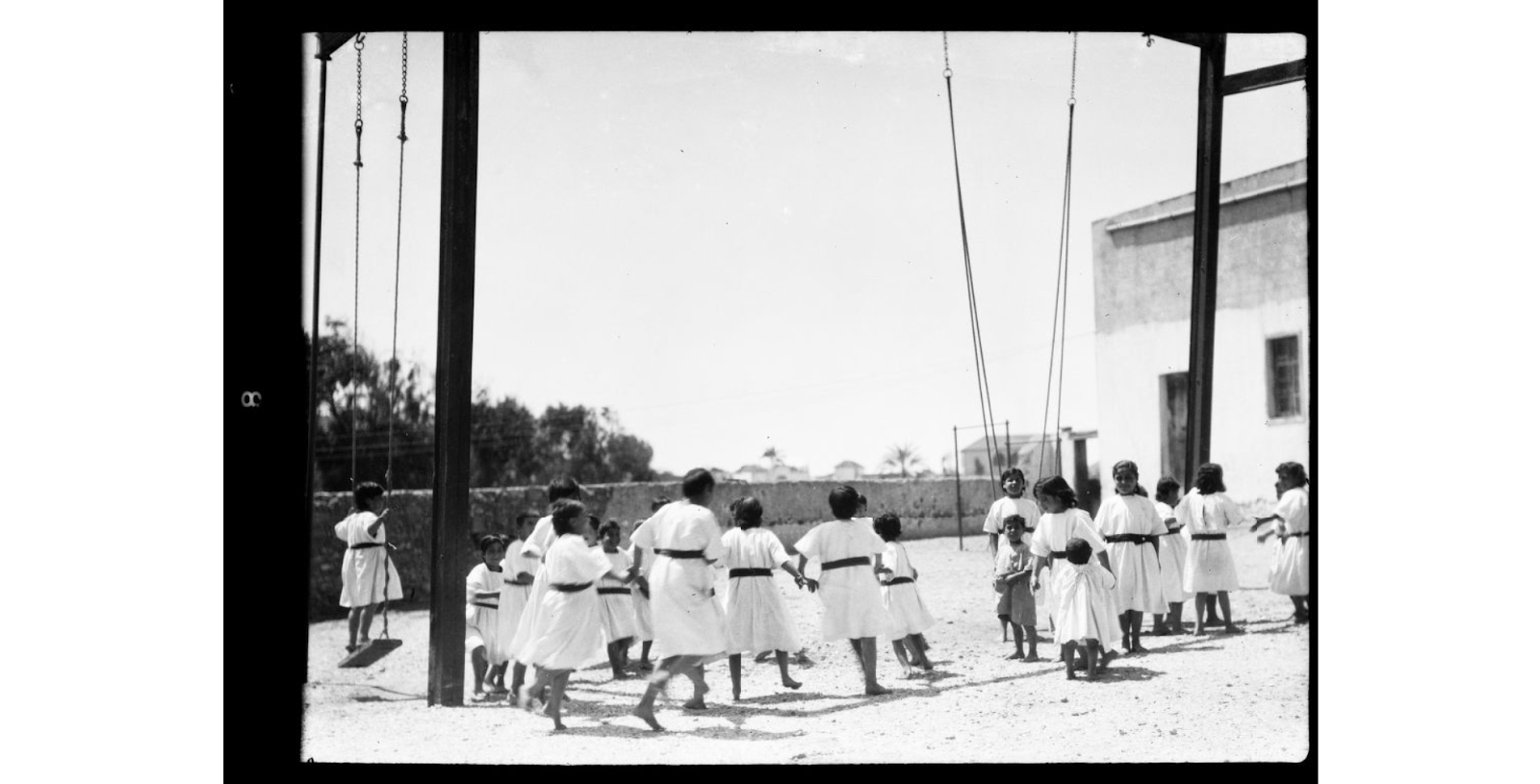
Jaffa was among the cities with the most schools in Palestine. Between 1944 and 1945, 77% of the Jaffan boys and 57% of the girls were attending school. Seven of Jaffa city schools had their own libraries, with a total of 9,876 registered books (in 1948) that we know of. All the books were looted in 1948.
“‘I remember one day I was in Jaffa / Tell us, tell us what happened in Jaffa,’ sang the Rahbani brothers. The blue sea described in this poem is visible from the roof of the Terra Santa School, behind the palm trees and the blue dome of a church. The school is less than a kilometer from St. Peter’s Church and proudly stands next to St. Anthony’s church.”
Terra Santa College’s webpage, the school was founded in Jaffa in 1730, and again in 1932.
A School that Survived it All

Built by one of Jaffa’s notable leaders and businessmen, Hassan Arafa School survived the destruction of Jaffa in 1948 not only as a building but also as a rare institution that still functions as a school to this day in Al Ajami neighborhood.
Hassan Arafa was a member of the Jaffa City Council, a businessman, orange exporter, and improved children's lives, supporting students, the poor, and orphans. The growth boom in Jaffa in the 1930s created a crisis in teaching locations. Arafa donated 5,000 Palestinian pounds (equivalent to the value of the British Pound Sterling) to build and furnish a new school for girls in Al Ajami, Jaffa. Construction on the school started in 1937, in the middle of the general strike in Palestine in 1936-39. When it was ready it had classrooms, teacher’s offices, a waiting room, a cafeteria, a meeting room, a reading room and library, a work room, a clinic, and a playfield. The Ministry of Education determined that there weren’t enough female teachers and decided it would be a male school instead. In 1941, the school housed 404 students and its library contained 1,331 books. Determined to have a school for girls and having invested a huge sum of money already, Arafa donated a plot of land for a school for girls. After ten years of effort, the school was ready.
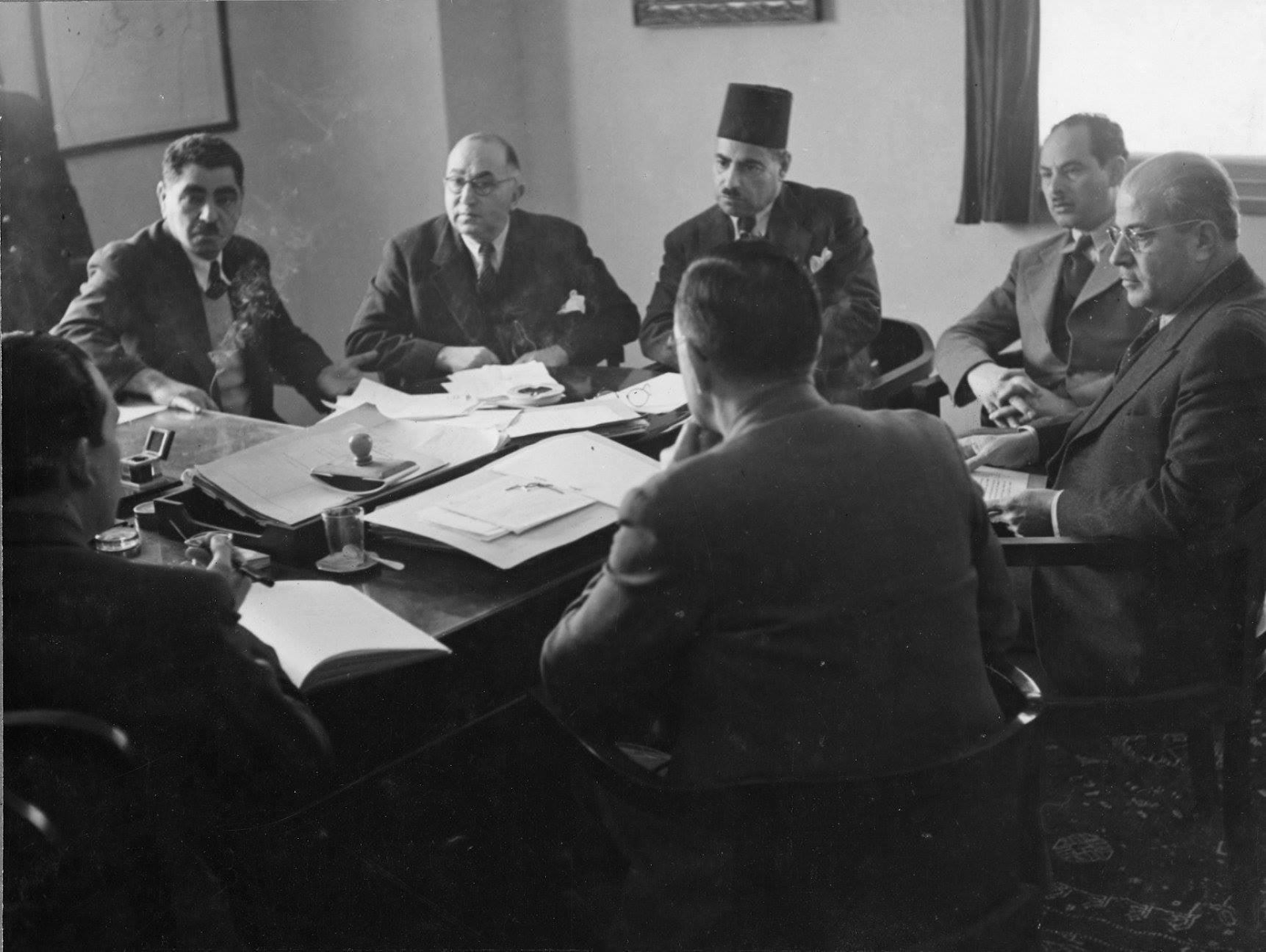


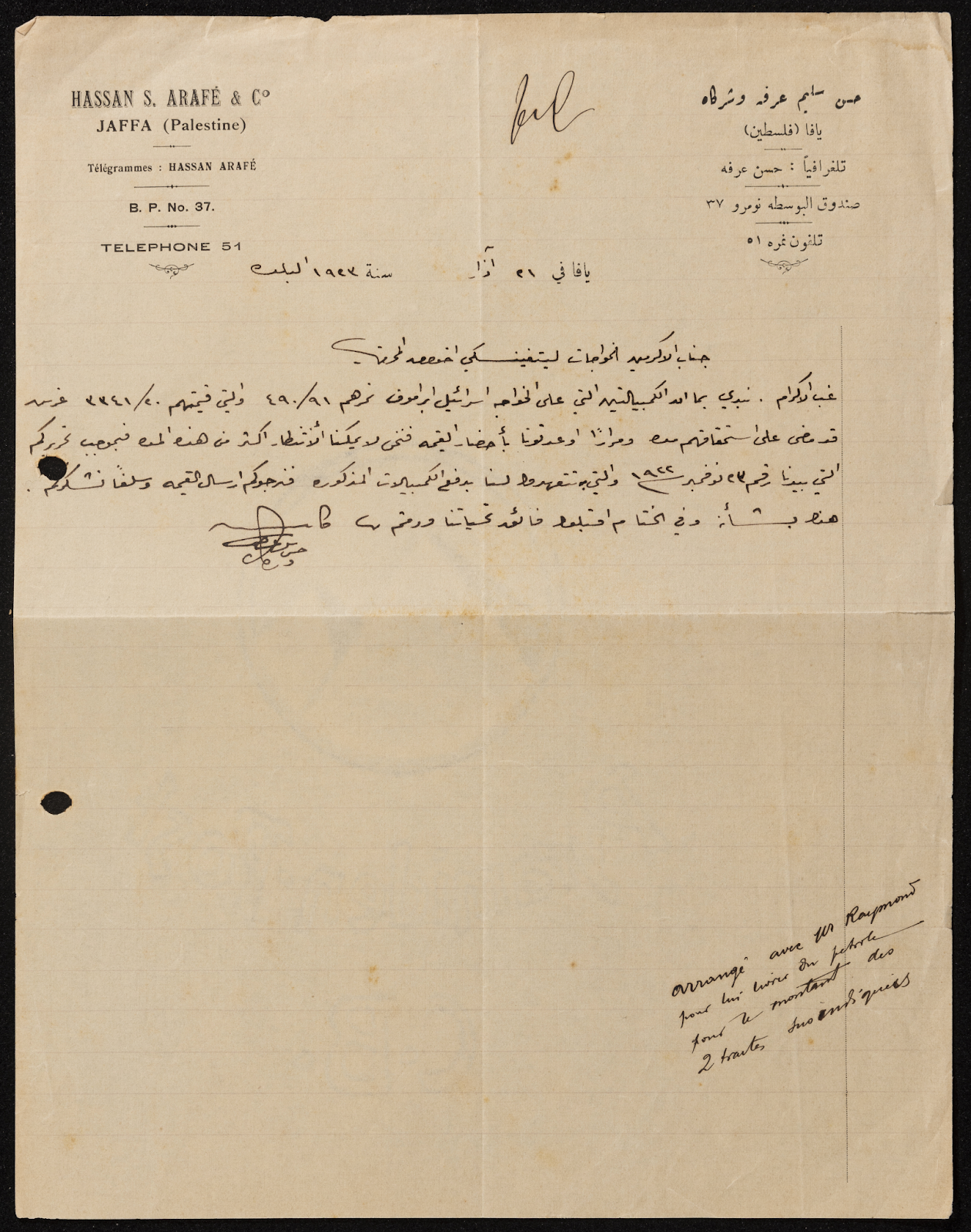
Arafa was born in Manshiyya neighborhood in Jaffa in 1885 and was the head of the Palestinian Textile Import Company and the Yarn Import Company. Arafa was a member of the Jaffa municipal court and municipality. He was also one of the heads of the Arab Merchants Association and a member of the Orphans Committee and the Endowments Committee, as well as the Local Knowledge Committee. Being a Jaffan he also owned an orange grove and exported citrus produce.
On the 11th of September 1945, Arafa had a heart attack and passed away. His funeral was held at Jaffa’s Big Mosque after his body was carried from his home on Jaffa Street near Lawrence Café. He is buried in Al Ajami cemetery next to his school.

In the Israeli News
Published by Globes, Israel business news - en.globes.co.il - on March 7, 2021 © Copyright of Globes Publisher Itonut (1983) Ltd. 2021
https://en.globes.co.il/en/article-hassan-arafa-tel-avivs-new-city-within-a-city-1001363162
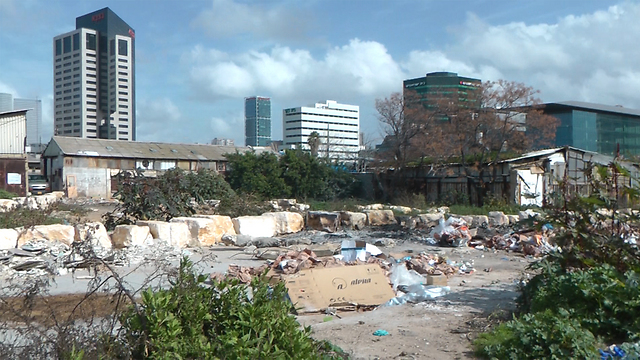
“In recent weeks, two big real estate deals worth hundreds of millions of shekels in the Hassan Arafa neighborhood in Tel Aviv have refocused attention on this developing area…13 high-rise buildings are planned for the district and the number is likely to grow…Acro Tower will have 32 floors…
The struggle for the name of the district
The district covers just over 20 acres…Originally agricultural land in Tel Aviv of the British Mandate, on the edge of Tel Aviv and the slopes of the Ayalon River, the name comes from a rich Arab from Jaffa who tended groves* in the district. Many of the developers have been trying to rebrand the district, which long ago lost its agricultural character…”
“The Hassan Arafa neighborhood, named after an Arab Sheikh* who ruled the area at the beginning of the 20th century, has become a center for poverty and neglect. When the British took control of Israel* they took over the villa that existed in the area and the only remnants of the once-developed area are the eucalyptus trees that stand among the stolen bikes that are strewn in the streets of the now-impoverished area.”
(* bold letters added)
Before 1948 Jaffa, its suburbs and villages in its vicinity had 47 schools: 17 for boys, 11 for girls, 9 mixed, and the rest rented spaces for teaching.
Some schools in Jaffa City before 1948:
Al Amouryah High School
Al Amouryah Elementary School
Al Ayoubyah, Al Ajami
Hassan Arafa School, Al Ajami
Al Umawiyya
Al Abbasiyya
Al Riad
Al Yarmouk
Jaffa Orthodox School
Tabitha School
Tariq Ibn Ziad
Al Fisaliyya Manshiyya
Al Islahiyya
Les Freres
Al Zahira high school
Banat Yaffa Manshiyya
Khawla Bint El Azhar Manshiyya
Amira Sabiha, Al Ajami
Asma Bint Is Siddeeq, Al Ajami
Al Adawiyya
This concentration of intellectual clusters produced an urban city with creatives and centers for culture and the arts, entertainment, leisure and sports. With nearly fifty schools and most of the publishing and printing houses in Palestine in one city, you are in the brains of the land. In addition to Hassan Arafa and Terra Santa schools, College de Frere (established in 1882) also survived after 1948. College De Frere was Issa El Issa’s primary school, also where Palestinian intellectual and writer Ghassan Kanafani went. Later, Jaffan filmmaker Scandar Copti also graduated from the same Frere school.

In March 1948, Hassan Arafa School closed. After the Nakba and later “ghettoization,” of Jaffa, Palestinians struggled to obtain their rights to education. Later, Jaffa was taken over by Tel Aviv Municipality, making it “Tel Aviv-Yafo”. A new curriculum was enforced on Palestinian schools which erased Palestinian history. School principals and teachers were selected through Israeli Intelligence.
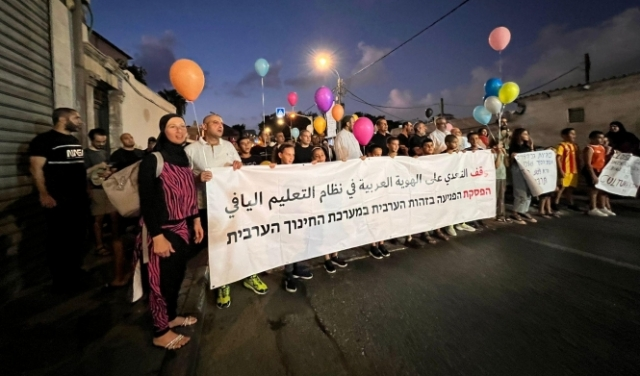
In 1950 Hassan Arafa school became a house for Arab teachers, then later returned to be a school for from kindergarten to sixth grade. To this day, Palestinian Jaffans take to the streets to protest exclusionary policies erasing the Jaffan Palestinian identity.

References