Published Story
Jaffans Bounce Back: History of Resistance in Jaffa
Resisting the Pharaos 1460 BC The first resistance of the Jaffans that we have archeological evidence of, is from around 1460 B.C.E. to 1125 B.C.E. when the pharaonic New Kingdom conquerors ruled Jaffa. In 1472 BC, Ph...
Resisting the Pharaos 1460 BC
The first resistance of the Jaffans that we have archeological evidence of, is from around 1460 B.C.E. to 1125 B.C.E. when the pharaonic New Kingdom conquerors ruled Jaffa. In 1472 BC, Pharaoh Thutmose III of the Eighteenth Dynasty occupied Jaffa. They arrived with a small fleet of 400 men and a smuggled 200 soldiers inside Jaffa hidden in giant jars. This was a way older story than The Trojan Horse. The result was occupation and resistance. Bent arrowheads and a massive destruction layer of burned mud bricks found under the collapsed tower at the Ramesses Gate, attest that the Canaanites bitterly opposed Egyptian rule in Jaffa, which reached its peak during the 12th century B.C.E. Layers of fiery destruction in ancient Jaffa bear witness to the violent Canaanite resistance to Egyptian rule over the seaside city thousands of years ago.

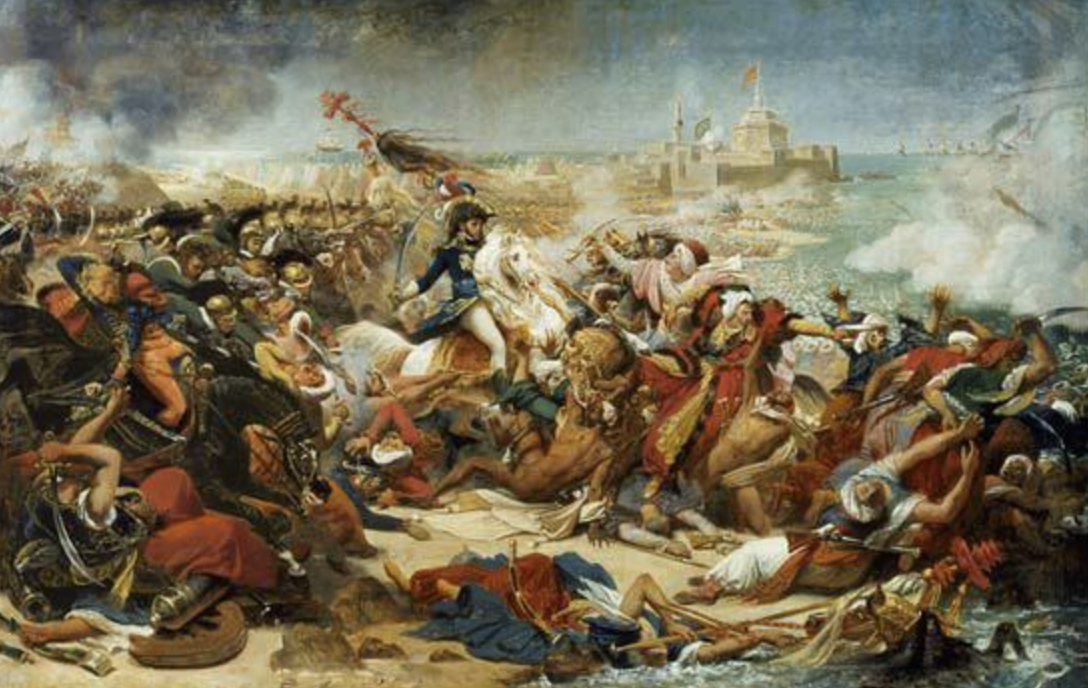
On the 3rd of March 1799, the French laid siege to the city of Jaffa which was under Ottoman control. Jaffans resisted fiercely inside a walled city against a modern army. Napoleon attacked with cannons and the French had a variety of innovative rifles, pistols, sabers, and axes. For four days, the Jaffans resisted, but on the 7th of March, Jaffa City fell to the French. Napoleon allowed his soldiers to slaughter and rape for two days and two nights. The French slaughtered about 2500-4000 people and the sick French army spread the plague.
1834 — Muhammad Ali Pasha (The Ottoman Ruler of Egypt) Destroys Jaffa
The Peasants’ Revolt in Palestine was a moment of political unity in Palestine. It was a revolt of all Palestinians from different classes, subcultures, geographical areas, and religions. The peasants and townspeople refused to supply the Egyptian ruler with a fifth of males of fighting age. This was the first of modern successions of revolts against foreign occupiers—against the British from 1936 to 1939 and against the Zionists in the 1940s and 1948.
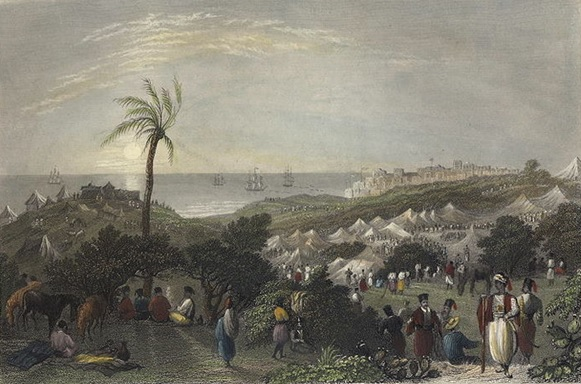
The urban notables of Palestinian cities, including Jaffa and its surroundings did not carry out Ibrahim Pasha's orders. On May 24th, Ibrahim Pasha departed from Jaffa with 9,000 soldiers on his way to capture Jerusalem. The next day, thousands of Jaffans and other rebels left Jaffa to attack Ibrahim Pasha's forces on their way. The five-hour trip, took two days while the rebels attacked the Egyptian troops, killing at least 500 soldiers. By June 8th, many crucial cities as well as Jaffa were in full rebellion. On June 30th, Muhammad Ali landed in Jaffa with 15,000 troops from Egypt. Ali personally ordered the decapitations of the governors of Ramla and Lydda and of the headmen of rebellious villages near Jaffa. The Mutasellem or the tax collector of Jaffa was beheaded. The administrator of Jaffa and his son were beheaded. Jaffa's urban notables, who backed the rebels fled by boat into exile to the island of Cyprus.
This revolt reduced the male population of Palestine by about one-fifth. Muhammad Ali Pasha demanded a fifth of the fit male population, between May and August in 1834 he left with a fifth of the fit male Palestinian population dead or exiled.
1936-39 — The British destroy Jaffa



The Great Palestinian Rebellion Or The Great Arab Revolt
The Great Palestinian Rebellion or The Great Arab Uprising was against the British administration of the Palestine Mandate, demanding Arab independence and the end of Jewish immigration as the League of Nations had authorized in 1922. The discovery of a shipment of arms, in October 1935, in the Jaffa port destined for the Haganah organization, fueled Palestinian concerns that the Zionist movement was aiming at a military takeover of their land. In reaction, a six-month general strike of the Palestinian population totally stopped the county. The British banned all Palestinian political parties, political and community leaders were arrested, and a number of high-profile public figures were exiled. British tanks, airplanes, and heavy artillery were deployed throughout Palestine. The British also meted out collective punishment: thousands of Palestinians were relegated to “detention camps”; residential quarters were destroyed; schools were closed; villages were collectively fined and forced to billet British troops and police.
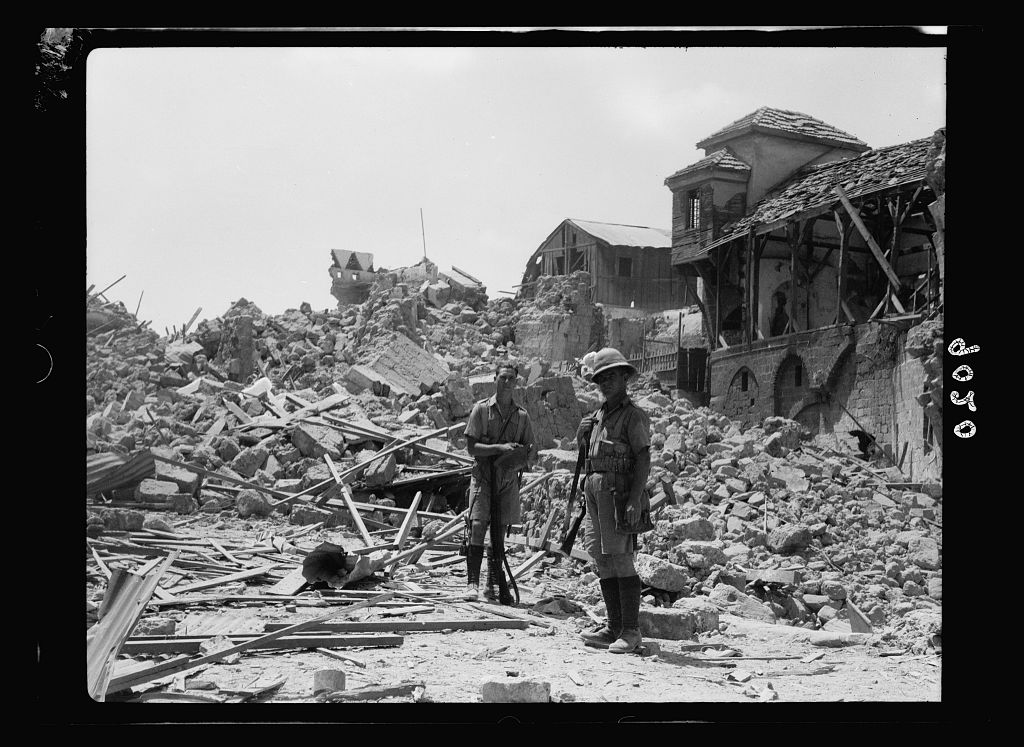
A British commission toured the country to see what was at hand. In 1937, the Peel Commission recommended the partition of Palestine into an Arab and a Jewish state. The Palestinian population relaunched their armed insurgency with renewed intensity, initiating the second phase of the revolt. Curfews were imposed in Jaffa, the uprising's first urban flashpoint, sometimes confining the whole population to their homes for twenty-two hours a day. The most extraordinary demolitions in 1936 came in June at Jaffa, where British forces razed much of the Old City to pave the way for military access roads. Issa El Sifri a Jaffan youth activist, compared the events to an earthquake and estimated that over one thousand dwellings and ancillary buildings were destroyed, putting ten thousand people out on the street. A later researcher counted roughly 650 families whose homes were destroyed and another 1,150 families that temporarily or permanently evacuated – rendering approximately one-sixth of the Arab population of Jaffa homeless. Although the demolitions destroyed a critical rebel sanctuary, local partisans continued. While Jaffa bore the brunt of the state's increasingly militarized response to the strike, other cities also became sites of urban warfare. Palestine's British garrison grew during the strike from two battalions to twenty-two, and the army took over schools throughout the country for use as barracks and bases, further contributing to the militarization of urban space. Jaffans faced searches over the next months, with hundreds detained afterward. The entire city's male population (boys included), was searched and processed in cage screenings at the local military base. From July 1937, until the fall of 1938, witnessed significant gains by the Palestinian rebels. Large swaths of the hilly Palestinian interior, including for a time the Old City of Jerusalem, fell fully under rebel control. Rebels established institutions, most significantly courts, and postal service, to replace the British Mandate structures they sought to dismantle.
By early 1939, members of the Jewish Settlement Police in Palestine (about 14,000) were subsidized, uniformed, and armed by the British government, Special Night Squads comprising of Jewish and British members launched “special operations” against Palestinian villages. The ranks of British and Jewish policemen swelled and Palestinians were subjected to house searches, night raids, beatings, imprisonment, torture, and deportation. The British called in military reinforcements. In 1939, more Palestinians were killed, more were executed (by hanging), and nearly twice as many were detained than in 1938. Over the revolt's three years, some 5,000 Palestinians had been killed and nearly 15,000 wounded. The Palestinian leadership had been exiled, assassinated, and imprisoned.
The Great Palestinian Rebellion in numbers:
25,000 to 50,000 British soldiers
20,000 Jewish policemen, supernumeraries, and settlement guards
15,000 Haganah militants
2,883 Palestine Police Force, all ranks (1936)
2,000 Irgun militants
The result of the revolt was:
5,000 Palestinians killed
15,000 Palestinians wounded
108 Palestinians executed
12,622 Palestinians detained
5 Palestinians exiled
Zionists Lay a Three-Week Siege to Jaffa and it Falls
On 14 May 1948, many parts of the city are destroyed and 97% of the inhabitants are ethnically never allowed to return. Of the about 120,000 residents, only 3,900 Jaffans stay in the historic city.
References
https://alchetron.com/1936%E2%80%9339-Arab-revolt-in-Palestine
https://en.wikipedia.org/wiki/Peasants%27_revolt_in_Palestine