Published Story
The Fruit of Royals and Mercedes Cars
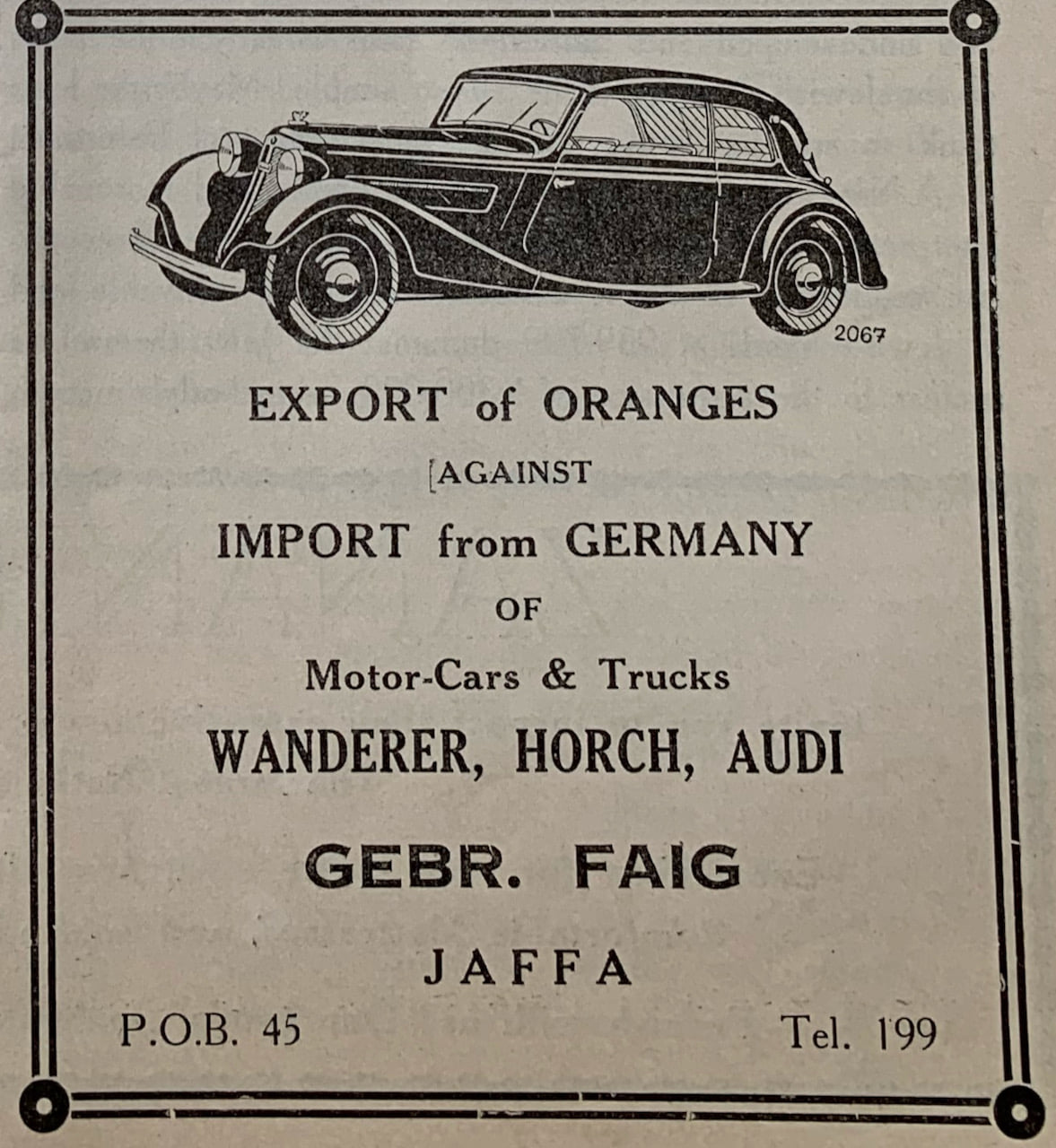
When A Mercedes-170 was worth 500 boxes of Jaffa oranges The Mediterranean made the ancient city of Jaffa. For centuries, fishermen and sailors were the Jaffans. But the name ‘Jaffa’ was transformed, and for the last...
When A Mercedes-170 was worth 500 boxes of Jaffa oranges


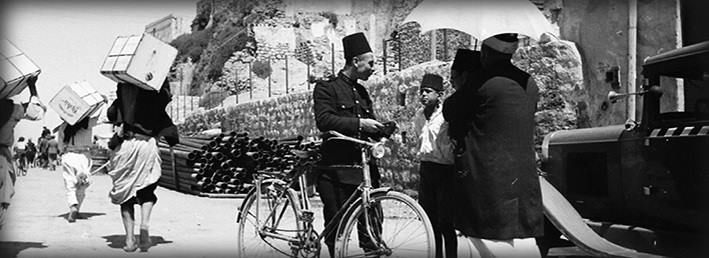
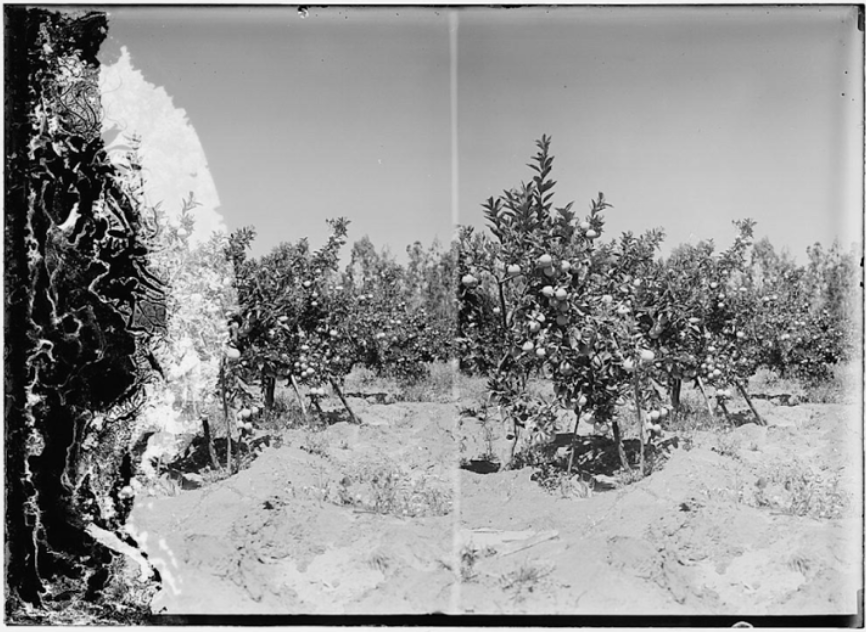
The Mediterranean made the ancient city of Jaffa. For centuries, fishermen and sailors were the Jaffans. But the name ‘Jaffa’ was transformed, and for the last one and half centuries, Jaffa has been its orange brand. There’s an orange, and then there’s the Jaffa Orange. Around 1844, someone in the Jaffan Shammouti family experimented and developed a brand new type of orange, resulting in the new Shammouti or Jaffa Orange. This new product changed the ancient port city and Palestine. It became the world’s most famous orange brand, until today. Jaffa Orange was the intellectual property and brand of Palestine in the 19th century and became a huge export success around 1865. Oranges became emblematic of a bustling urban Palestine, so much so that one of the suggestions for the design of a Palestinian flag in 1929 had a Jaffa orange in the middle.
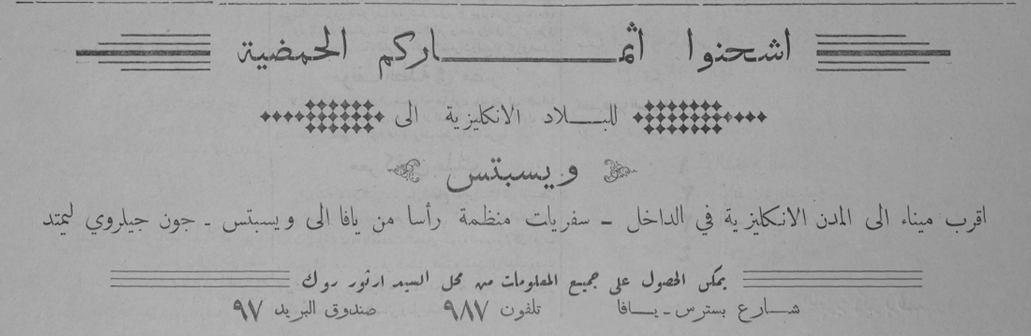
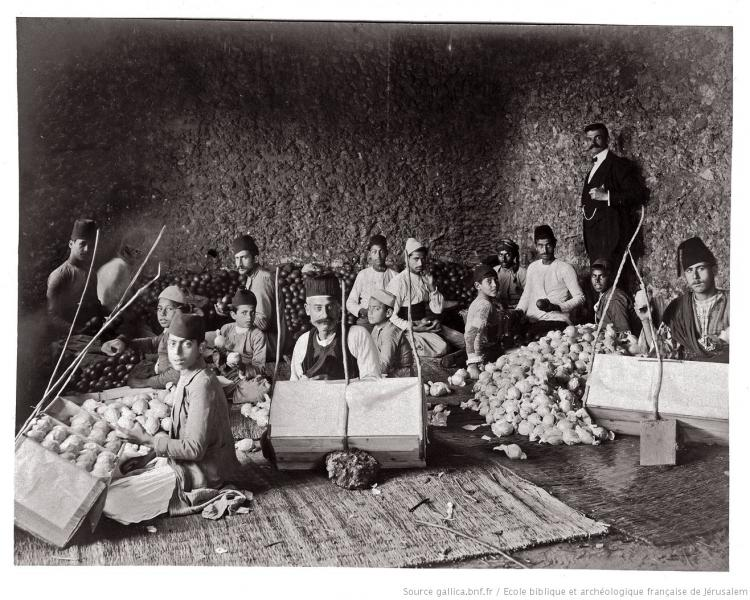
The Shammouti orange, developed by a mix of different breeds of oranges, is nearly seedless and has a very thick exterior, making it peelable without a knife. The thick peel gives it a long shelf-life, staying sweet and fresh for over 2 months from picking, making it excellent for long export trips. At a price mark 10 times higher than ordinary oranges, the Jaffa orange became Palestine’s biggest export, with around 400 million export oranges a year in the 1930s when citriculture became its principal industry. Nearly half of Jaffa’s residents worked jobs either directly or indirectly related to the citrus industry at the beginning of the 20th century. The new industry was labor intensive, men, women, and children of all ages were busy. The industry required specialized workers for irrigation, tending trees, picking oranges, storage, transportation, wrapping each orange in silk paper, the production of printed silk- and other paper items, wood suppliers, and carpenters to build the crates, and boats to get the boxes to the big ships (Jaffa’s port was rocky), drivers, merchants, housing and services for the new workers. Not to mention the network of national and international business partners, contracts, lawyers, insurance, banks, tax officers, translators, and marketing. In the 1930s, there could be 45 ships simultaneously waiting at the Jaffa port to be loaded with oranges. Jaffa orange boxes were unloaded in Russia, Italy, and France. The British royal palace was one of the first international clients to receive their Jaffa oranges wrapped in silk paper for Christmas. Jaffa oranges inspired international businesses such as the British Mc Vitie’s famous “Jaffa Cakes” already in 1927 and Finnish Harwall Haffa in 1949. Shammouti, the Jaffa orange is now grown in California and Florida and is named Florida Jaffa and Joppa. In the 1930-40s, Jaffa was exporting oranges while something else was being smuggled by Zionists on a large scale – explosives and weapons.
In the early 20th century, Jaffa’s oranges formed one-third of the city port’s export income. Historic Jaffa was a walled city. In the 1870s a second gate was opened in the city's walls because its inhabitants had doubled and the city was too dense. The orchards were in the east, and the city’s expansion was possible in the south and north. To the south rose the Ajami, a middle and upper-class new neighborhood still famous for its villas. Jaffa kept rising as an urban hub with a construction boom and new transportation modes. New workers started flooding and new Jaffan family names tell about their origins Shaami (Damascene or Syria), Beiruti (Beirut), Mughrabi (Morocco), Masri (Egypt), Afghani (Afghanistan), not to mention Algeria, Yemen, and Hijaz. This international boom needed new housing and services and the expansion of the city, again. These migrants were often unregistered, hence many were unaccounted for in the statistics of refugees of the Palestinian Nakba. Jaffans are estimated at 120,000 in 1948 when the city was ethnically cleansed.
Jaffa The Orange's Clockwork documentary, by Eyal Sivan
https://vimeo.com/ondemand/jaffaeng
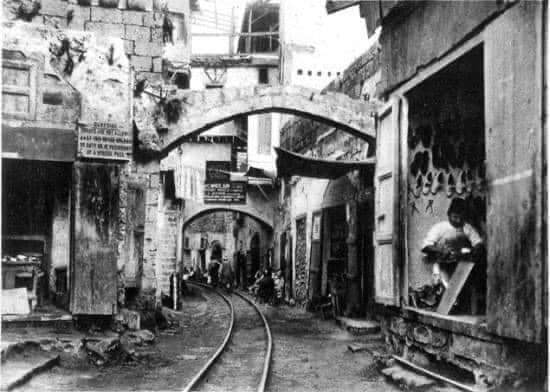

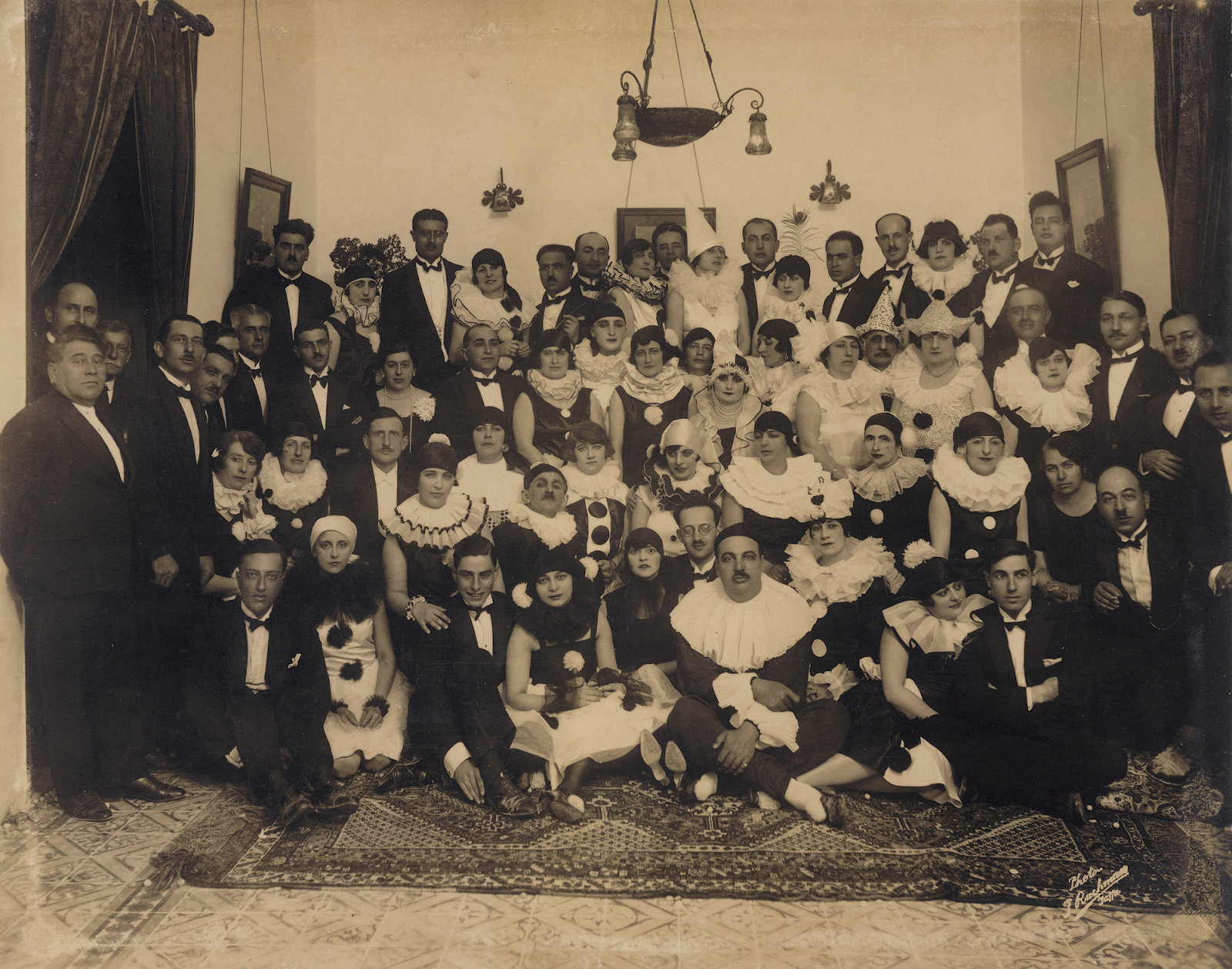
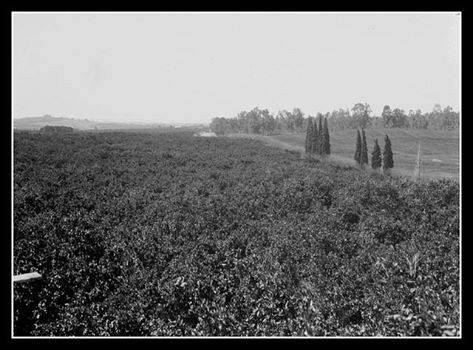
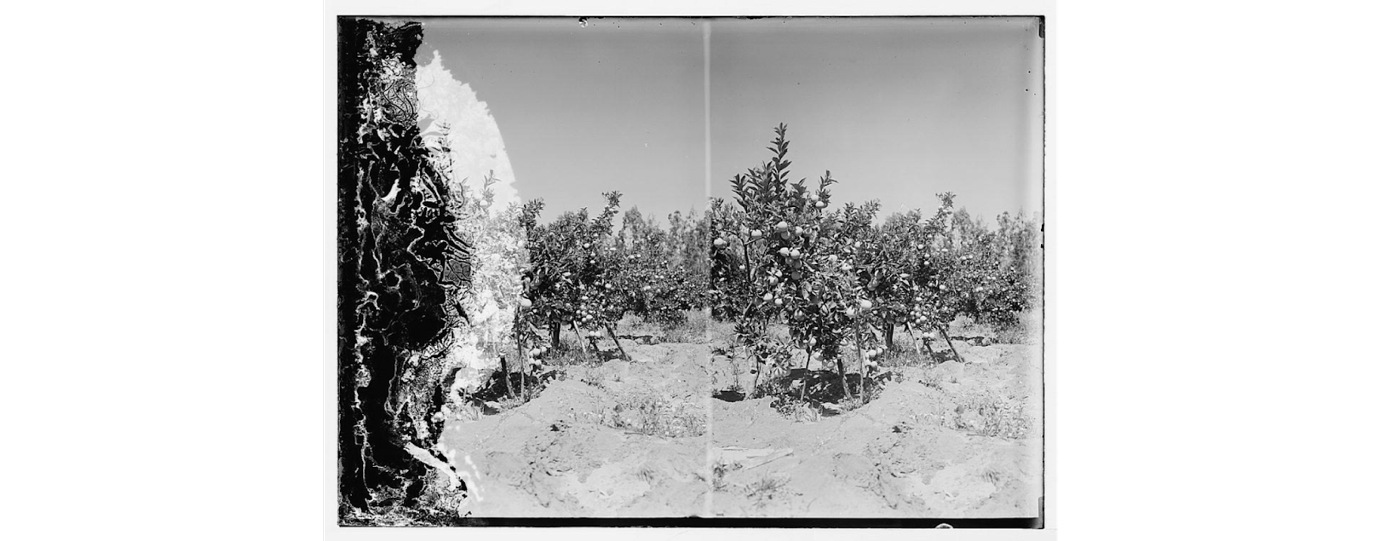
Between 1926 and 1939, the size of the citrus-cultivated lands in Jaffa increased from 30,000 dunums to 300,000 dunums, and the number of oranges exported increased from 2 million boxes to 15 million boxes. In 1945 Jaffans had planted 146,316 dunums of citrus and now the city wafted with orange blossom scent. The city has been historically prosperous because it was rich in water, enough to sustain its inhabitants. Although rainwater is sufficient for most products in Palestine, it is not sufficient for the Jaffa orange. Canals and pools were dug and built for those 150 thousand dunums. New urban planning emerged to support the orchards – “al-Bayyarat”. Big mansions, nestled in the lush orchards were the affluent owners’ vacation homes called Well-houses. Jaffa had over 200 well-houses, mansions surrounded by one or more pools, and workers’ homes. The mansion, orchards, and pools were famous for masquerade balls, receptions, soirees, and weddings some lasting multiple days and nights. In her autobiography, Rawda al-Hudhud writes about Huda and Fahim al-Farkh’s wedding: “Fahim filled the pool with apples, oranges, flowers, and roses, and lit the venue up with colorful lanterns.”
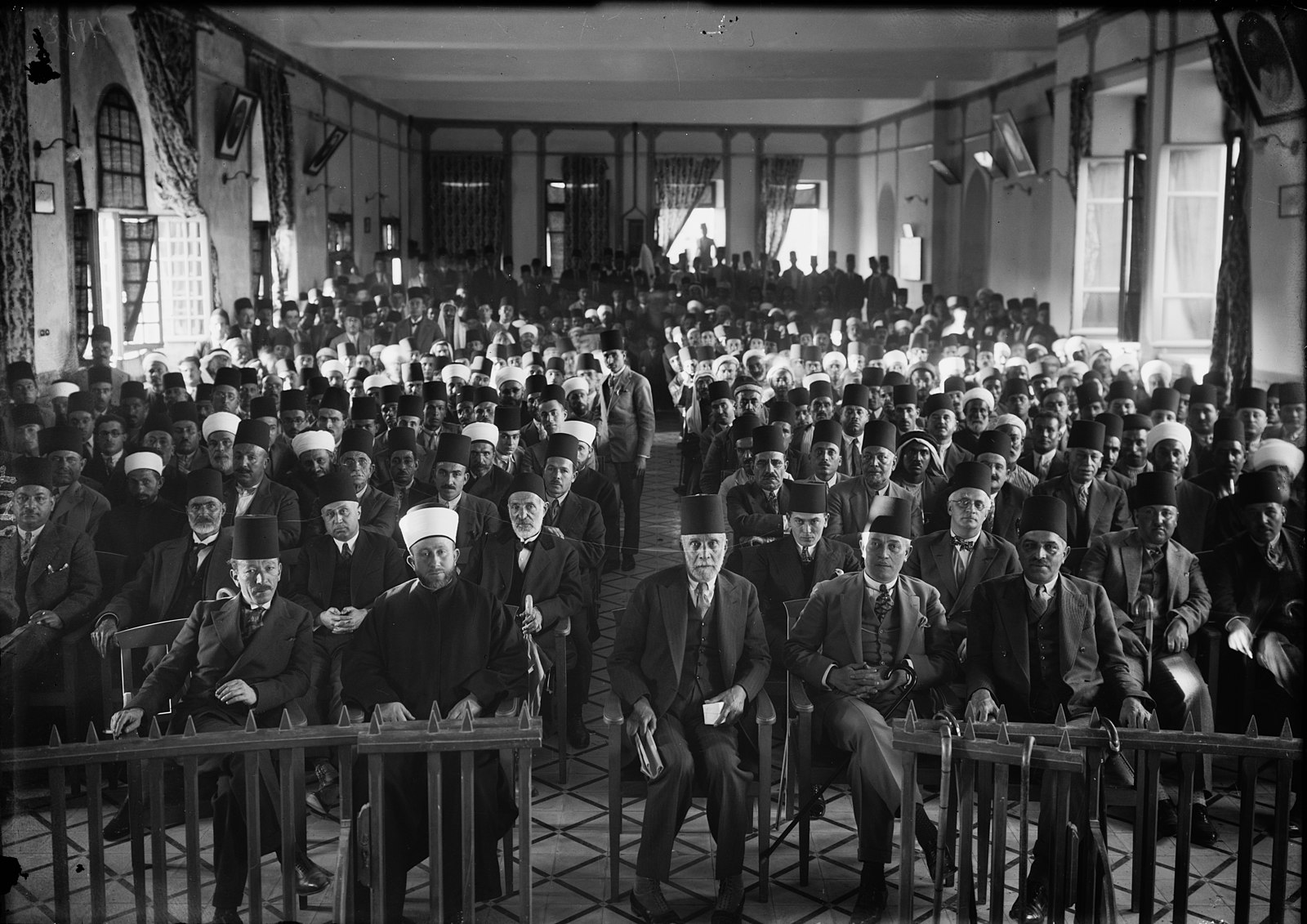
Jerusalem was the historic capital but Jaffa became the de facto urban capital of Palestine. Attracting businesses, innovators, investors, and new ventures, the city enhanced upward economic and social mobility. Jaffa’s wealthy families were deeply involved in Jaffa’s cultural and political work. The rich and lavish lifestyle of the owners of orchards, exporters, and businessmen, meant that they had new cultural, entertainment, and lifestyle needs. A sense of a new Palestinian identity was born, Palestinians identified with the oranges rooted in the land. But, not everyone was happy. The ‘original Jaffans’, the fishermen, felt that 400 million oranges a year, have buried the identity of the city. Jaffa’s core had moved from the sea and shore, inland, from the smell of salt and fish 12 months a year, to a dainty perfumed city from October to February, from tanned rough people to men and women in silk and hats, from singing in boats to pianos and phonographs. The farmers inland who had produced olive from olive trees saw the new, water-demanding orange trees as bourgeois. And true, Jaffa had now a new bourgeois class who lived in the new bourgeois Ajami in beautiful huge villas with spacious streets surrounded by cafés. This changed the harbor town into a top-notch modern city of its times, with cinemas, theatres, 14 public hammams, cafés, hotels, restaurants, and the biggest concentration of printing and publishing houses in the land. The change produced a city with intellectuals and creatives with the capacity of imagining futures and alternatives.
One thing connected all Jaffans though, fishermen and the rich, Muslims and Christians, women and men, and that was that Jaffa should be free. Half of the Jaffans were Muslims and half were Christians. One of the biggest Jaffan citrus exporters, also a member of The Citrus Board, was Alfred Roch. Roch was one of the most prominent Palestinian leaders during the British Mandate and opposed Zionism and colonialism. He established a sport club in Jaffa and his house parties and soirés were famous. He was part of the establishment of the Palestine Free Party in Jaffa and was active in supporting the revolt against the Ottomans and later against the British occupation and Zionism in 1936. He was exiled by the Ottomans and later banned from returning to Jaffa for 5 years by the British. Roch was respected and supported by the rich and the poor. Regardless of background, Jaffa was united on this front.

“Two days before the declaration of Israel's establishment, Jaffa was attacked by terrorist gangs, and all its inhabitants were driven out. A small minority of about 3,600 souls were able to stay.”
May 14th in 1948 was a Friday, about 115,000 Jaffans, orchard owners, fishermen, school children, sailors, editors in chief, bakers, lawyers, doctors, housewives, tailors, lawyers, dentists, carpenters, car traders, engineers, and migrant workers, were ethnically cleansed. Jaffa houses of fishermen and orchard owners were left as they are. The banks, hospitals, hotels, hammams, libraries, cinemas, churches, schools, mosques, cafés, bus stations, and bakeries were left as they are. In one day, from the heartbeat of Palestine, Jaffans turned into refugees. Every time you bite into a Jaffa orange, remember its inventor and the Jaffans wherever they are.
Alfred Roch, 1882-1942 was one of the biggest citrus exporters, involved also in shipping, and a member of The Citrus Board. Roch was one of the most prominent Jaffan Palestinian leaders during the British Mandate. He was also a renowned figure in the Roman Catholic community in Palestine and firmly opposed Zionism and colonialism. Alfred Roch actively campaigned to get public support for the Arab Revolt in 1916 and the Ottoman authorities exiled him to Anatolia. After the end of World War I, he returned to his hometown and became an exporter of Jaffa oranges, especially to Britain.