Published Story
Chapel Nossa Senhora do Baluarte
Architecturally, it is built in Manueline style, being the only one of its kind, in a good state of conservation, in all Subsaarian regions of Africa. It is also considered to be the oldest European construction in th...

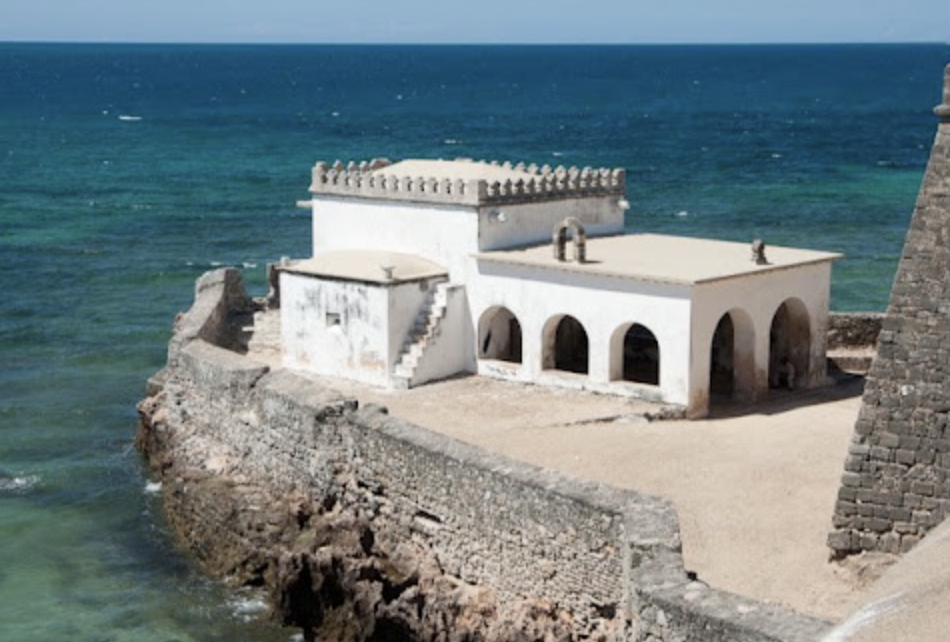
Surrounded by the high walls of Fort São Sebastião and the infinitude of the Indian Ocean, lies the Chapel Nossa Senhora do Baluarte, continuously splashed by salt water and fustigated by erosion.
The Chapel Nossa Senhora do Baluarte dates from the sixteenth century (1522). Architecturally, it is built in Manueline style, being the only one of its kind, in a good state of conservation, in all Subsaarian regions of Africa. It is also considered to be the oldest European construction in the southern hemisphere, holding at least 12 underground tombs.
Its structure is made of stone masonry and inside we find a single chamber, the slab flooring, and roofing tiles. In the nineteenth century, an external porch was added to the structure, probably on Indo-Portuguese influence, and, in 1996, the chapel went on rehabilitation works.
In 2019, cyclone Idai inflicted severe damages to the structure of the Chapel. Rehabilitation works are intended to start in 2023.
The access is done via Fort São Sebastião, in the northern limit of the Island of Mozambique, as the chapel is located on one of its bastions.

Bibliography to know more:
Lobato, Alexandre (1966) - A Ilha de Moçambique. Panorama Estético. Lisboa.
Rau, Virgínia (1963) - Aspectos étnico-culturais da Ilha de Moçambique em 1822. Lisboa.
Dias, Pedro (1998) - História da Arte Portuguesa no Mundo. Espaço do Índico. Lisboa, pp. 356-380.
Loureiro, João (2001) - Postais Antigos da Ilha de Moçambique & da Ilha do Ibo. Lisboa, p. 91.