Published Story
Palácio de São Paulo
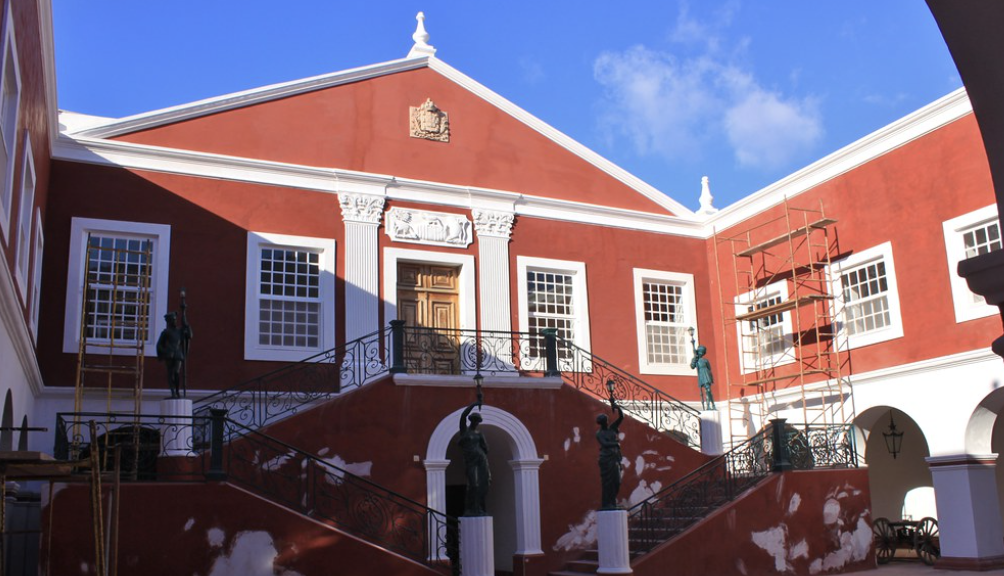
Palácio de São Paulo. Ilha de Moçambique, 2017. © Verónica M. Pereira In Stone Town, a monument that catches one's attention is the bright magenta Palace of São Paulo, also known as the Palácio dos Capitães-Generais....

In Stone Town, a monument that catches one's attention is the bright magenta Palace of São Paulo, also known as the Palácio dos Capitães-Generais.
Possibly constructed using the basis of a former defensive tower, the building was erected between 1619 and 1635 to house the College of the Society of Jesus, with an annexed chapel of São Paulo, of baroque style.
The mounment has endured several alterations in its usability and architecture throughout the centuries. With the Jesuits expelled from the Kingdom of Portugal, the building was transformed into a Palace to host the Governor of Mozambique, changing its name to Palácio dos Capitães-Generais and later to Palace of the Governor, remaining the administrative centre of the country. It remained so until 1898, when the capital of Moçambique moved to the South to Lourenço Marques. The Palace was then inhabited by the Governor of the Moçambique District until 1935, again with the administrative capacity moved to current Nampula city.
Without frequent usage, in 1969 the Palace was remodeled to mark the construction of the bridge that connects the Island of Mozambique to the mainland.
In 1975, Samora Correia slept at the Palace on its way to Maputo. Shortly after, the first President of Mozambique declared the Palace to be transformed into a museum. It was then restored in 1990.
Today, the building showcases eighteenth-century architecture and contains within it two museums: the Navy Museum and the Museum-Palace of São Paulo, which holds one of the biggest collections of indo-portuguese furniture and art.
Adjacent to the Palace sits the Misericórdia Church, which hosts the Museum of Sacred Art.
To know more:
Fundação Calouste Gulbenkian (1983) - A Ilha de Moçambique em Perigo de Desaparecimento, Lisboa.
Loureiro, João (2001) - Postais Antigos da Ilha de Moçambique & da Ilha do Ibo, Lisboa, pages: 24, 37, 56, 57, 61, 75, 78, 101, 109.
Ilha de Moçambique Turismo , MUSEU DA ILHA DE MOÇAMBIQUE.